
Text to Speech
Create a voiceover with speaker blocks, voice selection, and reusable takes.
Open Text to Speech in your workspace to create narration, dialogue, or a script with multiple speakers.
Generate a take
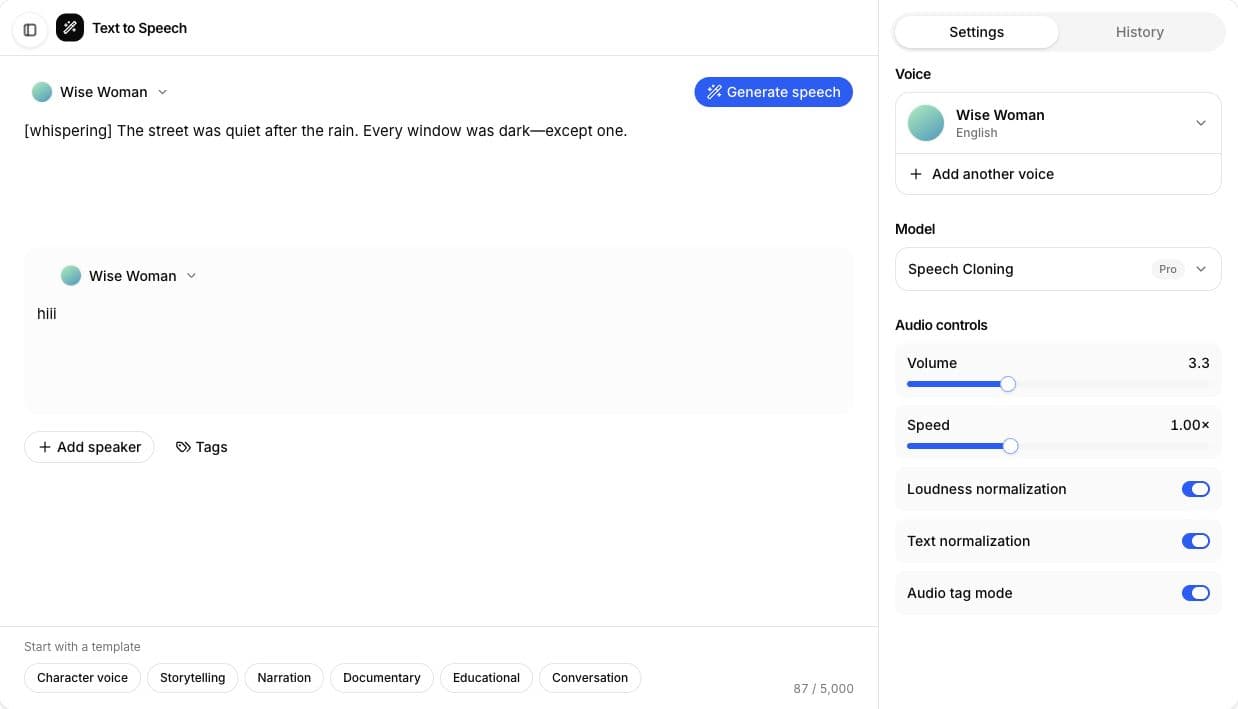
- Enter your script in the first speaker block.
- Open the voice selector or Browse all voices and listen to the available previews.
- Choose the speech model and a voice supported by that model. Speech Lite uses the preset voice catalog; Speech Cloning supports its presets and your custom voices.
- Add another block for a different speaker or passage. Choose its voice and arrange the blocks in reading order.
- Adjust available settings such as speed, volume, and normalization.
- Select Generate speech. Wait until the take is ready, then play it back.
- Use History to revisit takes, download audio, or copy an audio link.
Switching models can reset voice selections because the voice catalogs differ. Recheck every block after changing the model.
Choose a voice
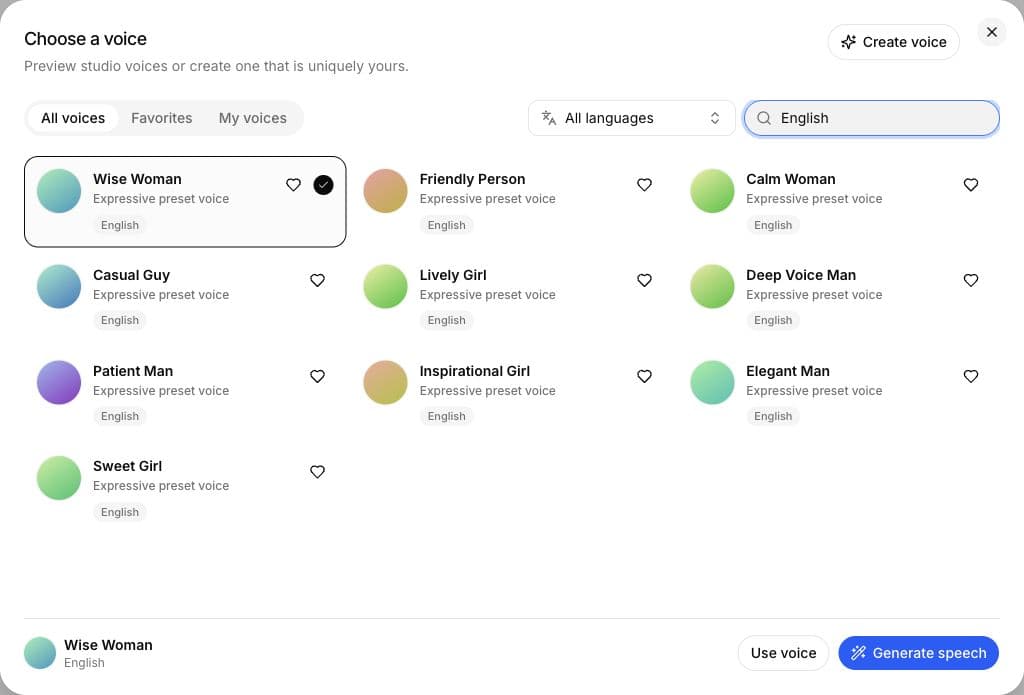
Search the voice library by voice name, language, or ID. Preview available samples and use the Favorites and My voices tabs to narrow the list.
Write for listening
Use punctuation and short sentences to guide pacing. Spell out ambiguous numbers or acronyms when pronunciation matters. Test a short passage before rendering a long script.
Use only the expressive tags supported by the selected model. The current speech endpoint accepts text blocks; it is not the old SSML/header-based TTS API.
Credits and limits
The cost depends on the model and amount of text. Follow the character counter and credit estimate in the editor. Creating a new take is a new generation; listening to an existing take does not create another one.
For custom voices, see voice cloning. For automation, see Speech API.